Secrets of Venice Tourism
Venice Italy is full of secret places; this page is focused on those most Venice Tourism guides seems to miss. Join me, Maria, in exploring La Bella Venezia. A city I love!
Best Way to Discover Venice?
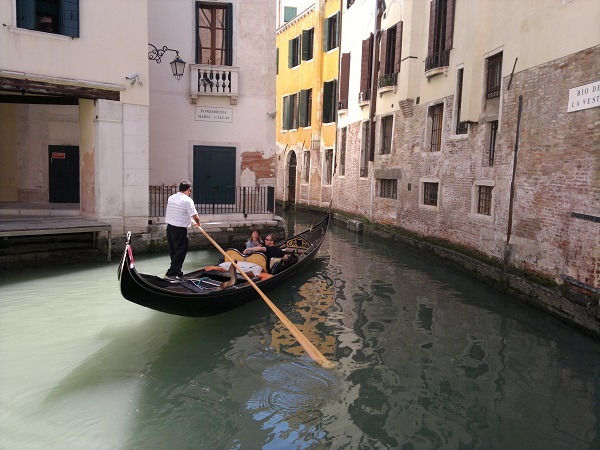
Many of Venice’s secrets are discovered by simply walking around without a destination in mind. By venturing down the little lanes and alleyways you'll be amazed at the incredible canals, squares and ancient sights you'll stumble upon.
A Couple of Tips
- Don't want to explore on your own? Then explore Venice with an expert (click for details).
- On a budget? Then stay away from the hotels around St Mark's Square. In other gorgeous parts of Venice you'll find great hotels at very reasonable prices - I've the best ones for you right here.
Let's start our journey through Venice by exploring the Dorsoduro district:
If you aren't sure where a place is just visit our Venice Map page.
Dorsoduro District of Venice
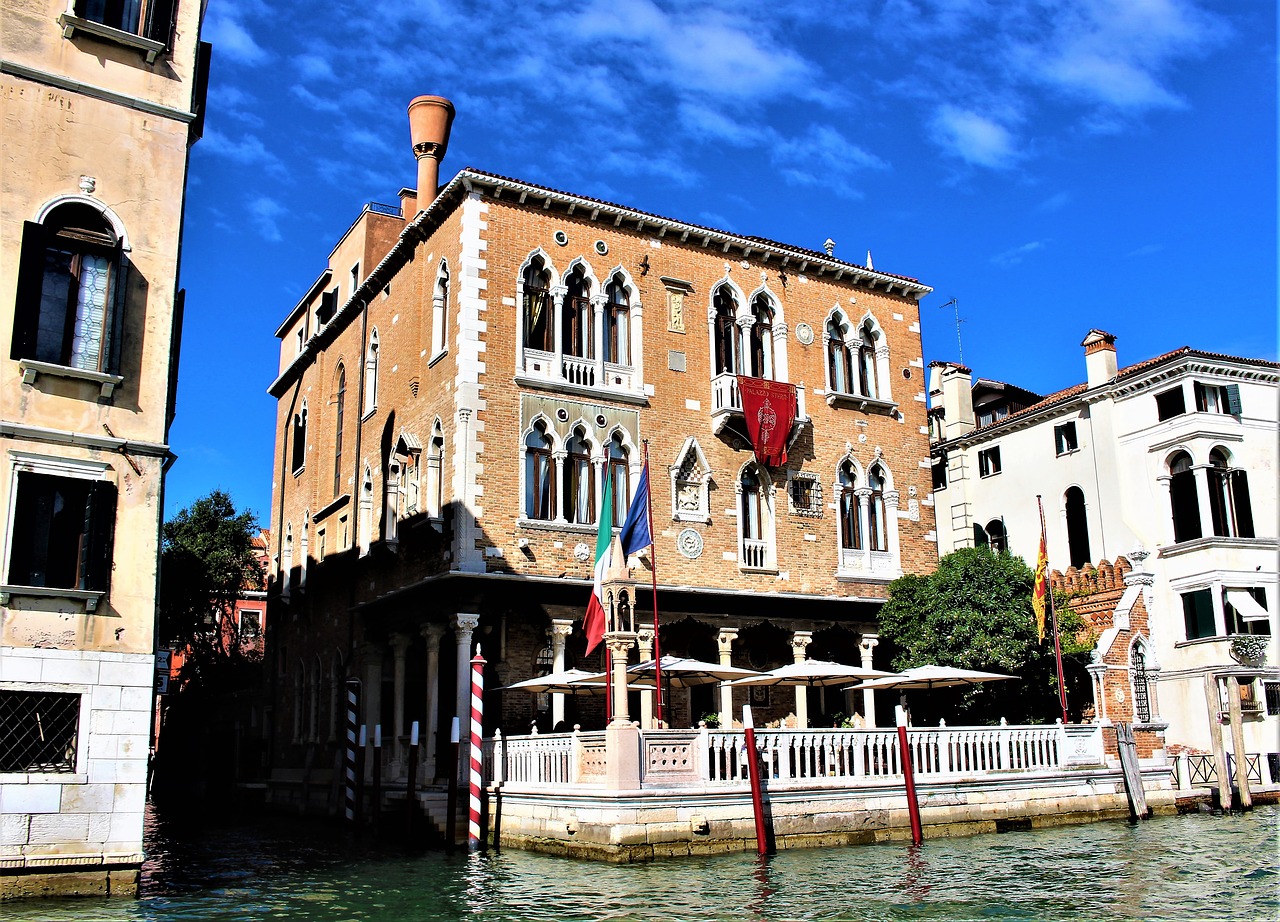
A breath of fresh air after the crowds of tourists in the San Marco district, this is the real Venice, a place where Venetians still live and go about life oblivious to the theme park world of St Marks Square.
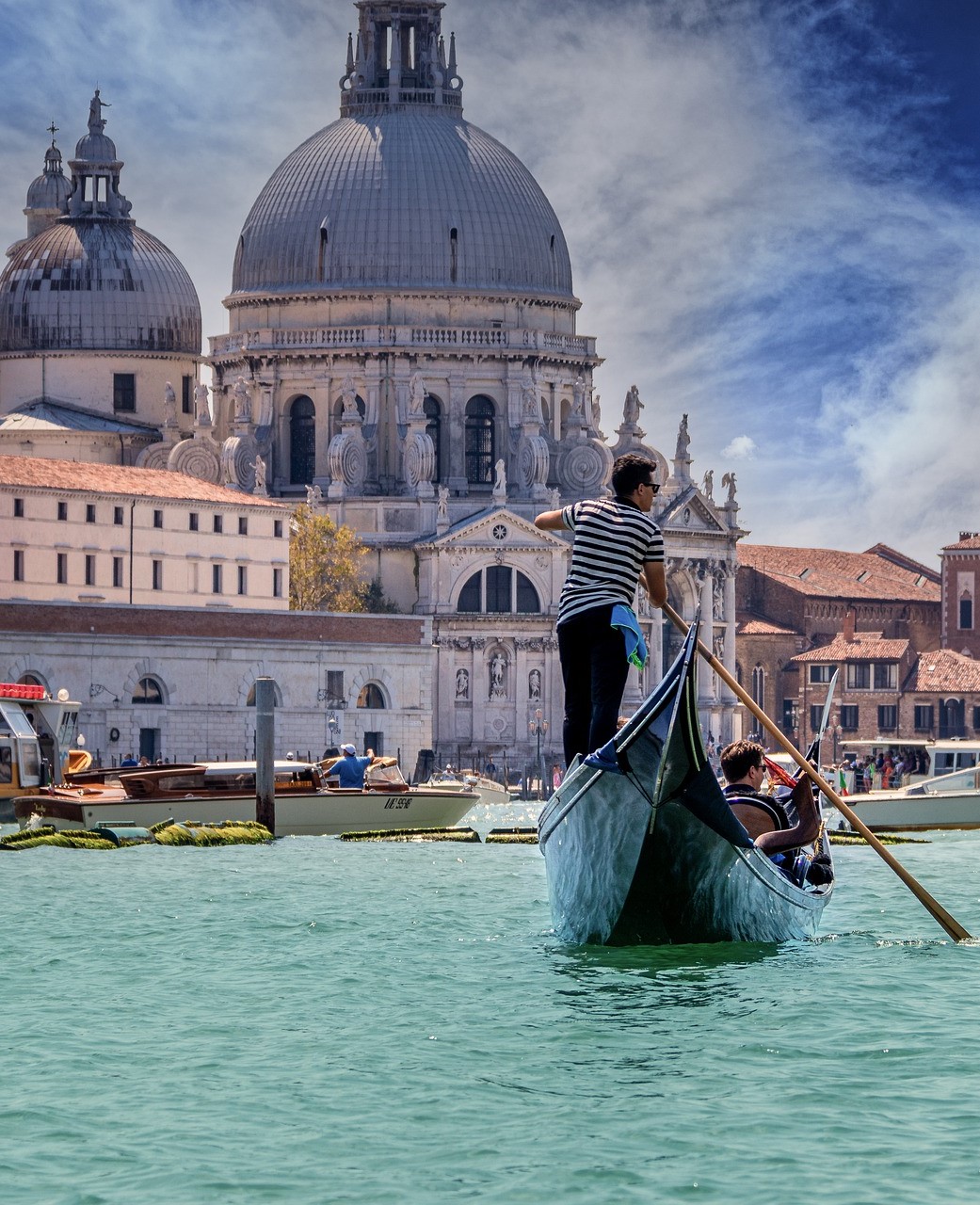
The Dorsoduro is home to one of the most magnificent buildings in the whole city - the Church of Santa Maria della Salute. This church was built to thank God for helping Venice to overcome a pandemic centuries ago.
Truly a church for our times!
Read more about this church in our article about the 12 most beautiful churches in Italy.
Click for more about the Dorsoduro district.
Burano
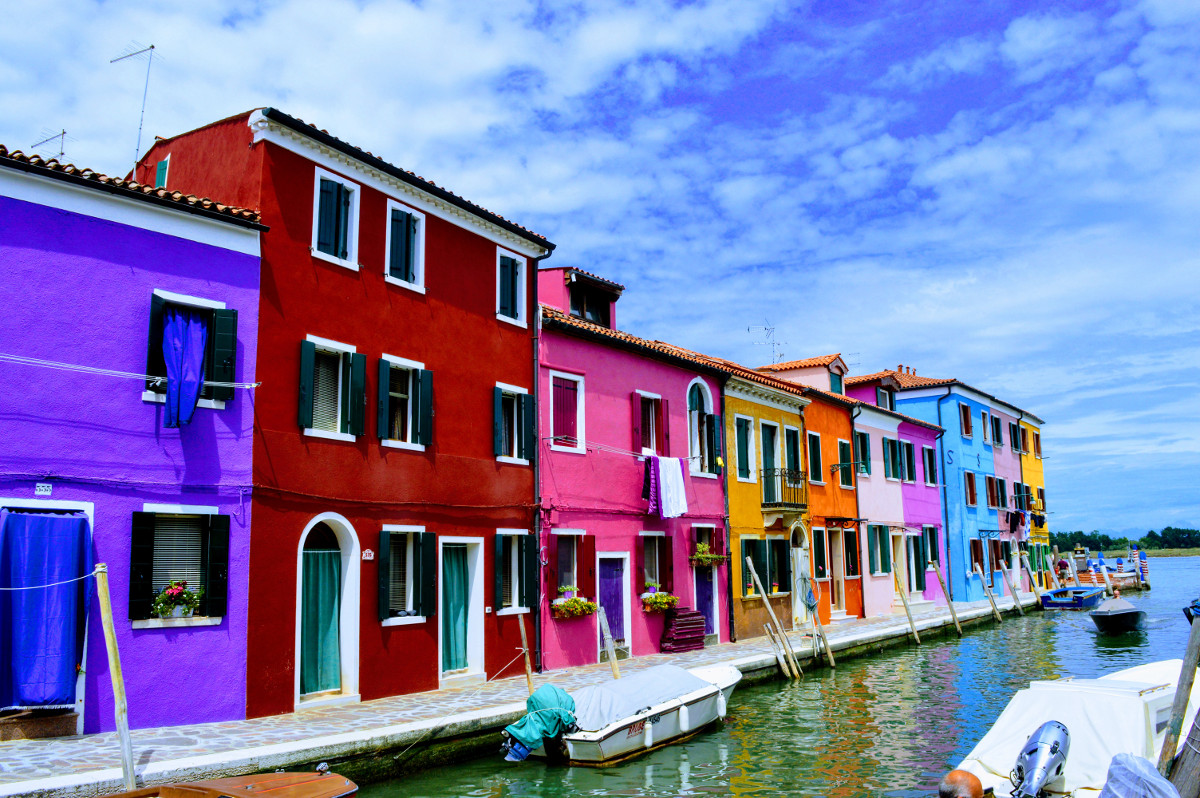
Just a short boat ride away from Venice lies another smaller version of the city. One where the welcome is always warm and the bright and happy nature of the inhabitants is matched only by their colorful houses. It's the perfect place to sample local seafood dishes too at a fraction of the price they charge in Venice. Here's all you need to know about Burano.
Palazzo Contarini del Bovolo
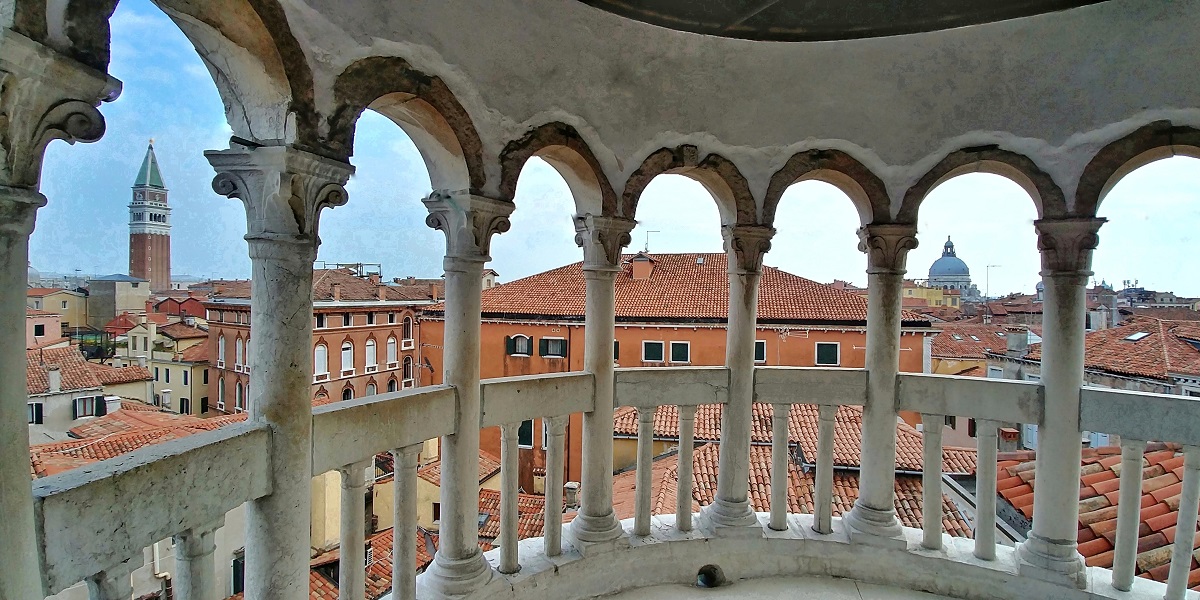
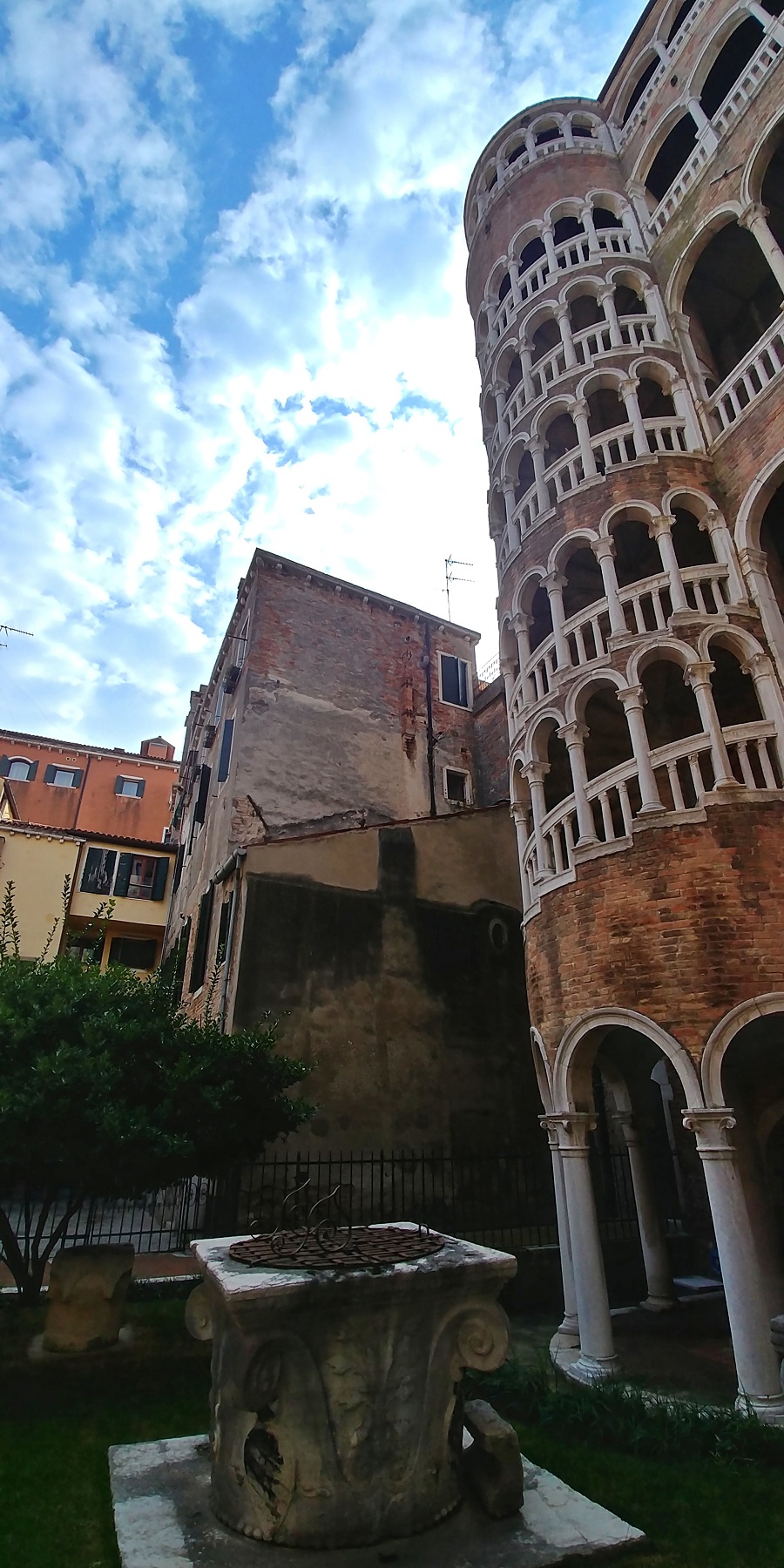
Tucked away in a side street near Piazza San Marco is this rather unusual tower. Despite being so near to the main tourist sites of Venice there are never many tourists here. It seems to have escaped the attention of the masses so far and that makes it even lovelier to visit.
Last time we visited was September and we had the wonderful viewing deck and the glorious views all to ourselves. It really is a spectacular view too, we could hear Andrea Bocelli 's Vivo Per Lei drifting up on the breeze from a house far below: it made for an unforgettable moment.
A bit of history: the tower itself was added to the palazzo in the 15th century to add a little bit of glamour to a palazzo located in a not so glamorous part of Venice. The name of the tower refers to the spirals on a snail's shell which the winding staircase resembles.
The highlight here is the walk up and the view from the top. It is around 60 steps in total and the view is ever changing as you wind your way around the staircase. I love the moment you suddenly spot St Mark's Campanile around one corner (you'll see it in the video).
You can get here easily by foot from the Rialto Bridge or from Piazza San Marco although it can be a bit difficult to find. Rather than me explain (you will never find it based on my directions) I recommend you use Google or Apple maps.
It costs 7 Euros to get in (it's free for children under 12 and Venice residents) and that entitles you to walk up the staircase, enjoy the view and also to visit the art gallery hosted in the building, which, although very small, sometimes hosts some rather good and often historically important works of art.
The Southern Lagoon
A nice peaceful escape and a great place to take the kids camping for a few days, more of a naturally beautiful place rather than one offering much in the way of man-made wonders.
The area is a bird watchers paradise with a range of rare species including the black-winged stilt and grey heron. I don’t know much about bird watching but friends who do tell me this is a superb place.
The southern lagoon area has only recently been opened to Venice
tourism with the onset of the ATN boat company tours – conducted in
English, German and French. The bits I like best on these tours are the
ancient old fishermen’s huts perched on stilts and an old hunting lodge
which is starting to fall apart. Read more here.
Parks in Venice
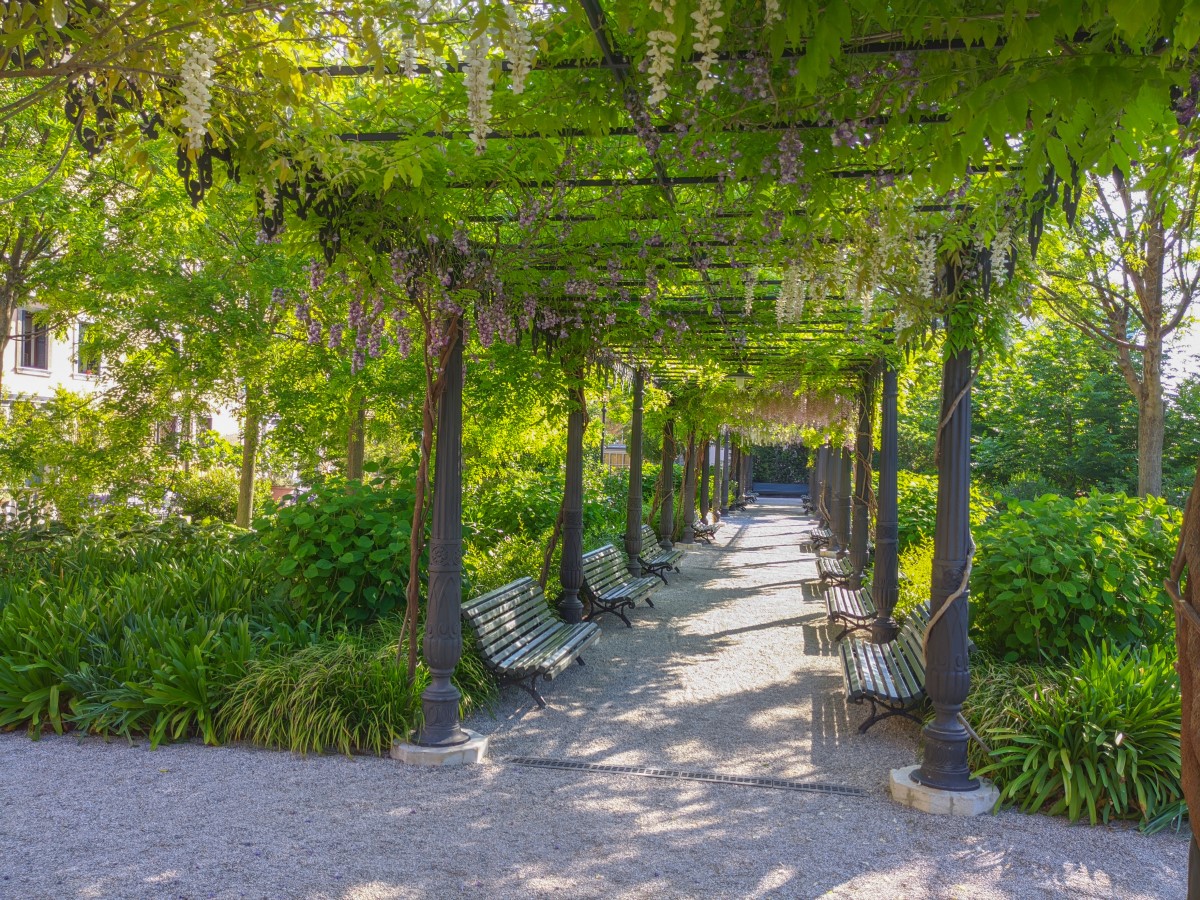
Venice is not only historic buildings, the city has some idyllic parks, quite corners that allow you a little time-out to reflect before heading back into the hustle and bustle.
The Giardinetti Reali (Royal Gardens) is the best of the parks – this park owes its existence to Napoleon, who perhaps wanted some greenery to remind him of Paris while he was in Venice and, at least to me, the gardens seem very French in style.
There are also some absolutely wonderful cloister gardens; these I love most. I sit quietly, often all alone, a sense of peace comes over me and the hustle and bustle of Venice seems a million miles away.
Cannaregio
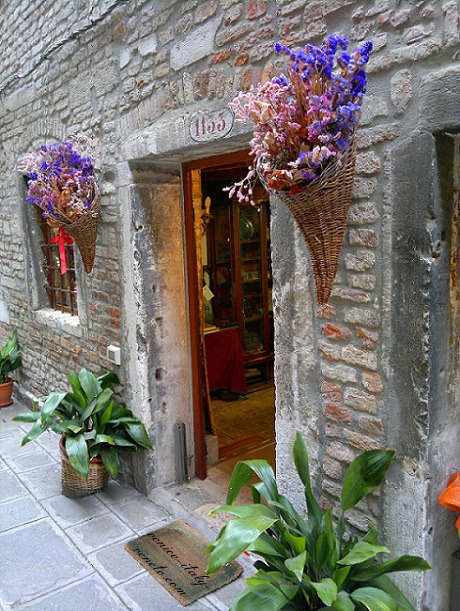
Like Dorsoduro, Cannaregio is one of the few places where you'll find the bars and restaurants full of genuine Venetians and you'll even see shops selling useful things and not just tacky souvenirs.
Prices too are fairly reasonable, at least compared
to St Marks, and it does have some interesting sights of its
own. Read more about Cannaregio here.
The Ghetto
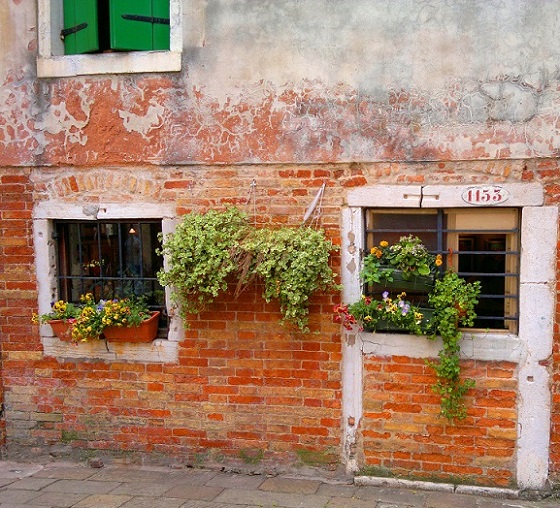
An important part of Venice’s history and the first Jewish ghetto in Europe, in fact this is where the word ghetto originates.
The area has until recently been a largely forgotten part of Venice; however, tourism here is starting to grow so enjoy it while you can before the area becomes like the other more touristy parts of Venice.
Walking around the cramped alleyways and along the narrow canals is well worth a morning and the Jewish Museum provides an insight into what life must have been like in this ghetto. Click for more on the ghetto and its history.
Cà Zenobio and Cà Rezzonico
Both of these buildings are architecturally important examples of 17th century Venetian architecture. Cà Zenobio has some great works of art by important artists of the period – while Cà Rezzonico houses a delightful Venice museum on 17th century Venetian life – you can read a little more about Cà Rezzonico under our Dorsoduro section.
Castello District
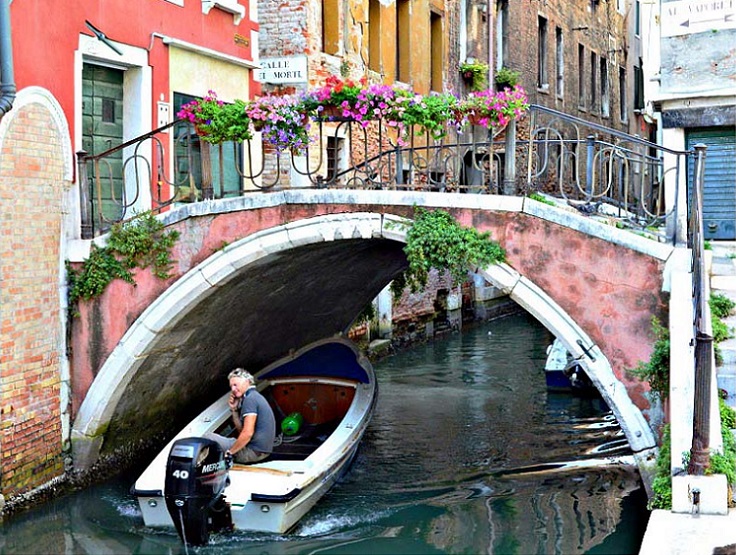
Mainly a working class area that can seem a little run down, despite this the area is worth a visit. Hidden away here and there are some very interesting places and this is most certainly one of those parts of Venice tourism has not touched.
The oldest Greek Orthodox Church outside of Greece/Turkey, San
Giorgio dei Greci, is found here. Dating back to the 16th
century it was the centre of Venice’s once fairly large Greek community –
a community that had a profound influence on the city and contributed
to the Byzantine look so prevalent in Venice. For more on Castello read our guide here.
Ca’ Dario
A haunted castle in Venice? Well I suppose it is more of a haunted palace. Built in 1487 Ca’ Dario is not the sort of place you want to own but if you do feel rich and brave then I believe it might be for sale again.
Since it was first built this very unusual and strangely
beautiful building has led to the deaths of nearly all who have owned
it. The long list of victims includes the manager of the rock band “The
Who”. Brave enough to want to learn more? Click here!
Santa Maria Gloriosa dei Frari
The Santa Maria Gloriosa dei Frari (friars in Italian) was the first
church in Venice built by the Franciscan Friars, the church dates back
to the 14th century.
The simple no nonsense elegance of the church is in keeping with
the lifestyle of the Franciscans. Inside though it contains some very
significant art works by Titian, including the magnificent Assumption. Read more about the church here.
Rialto Market
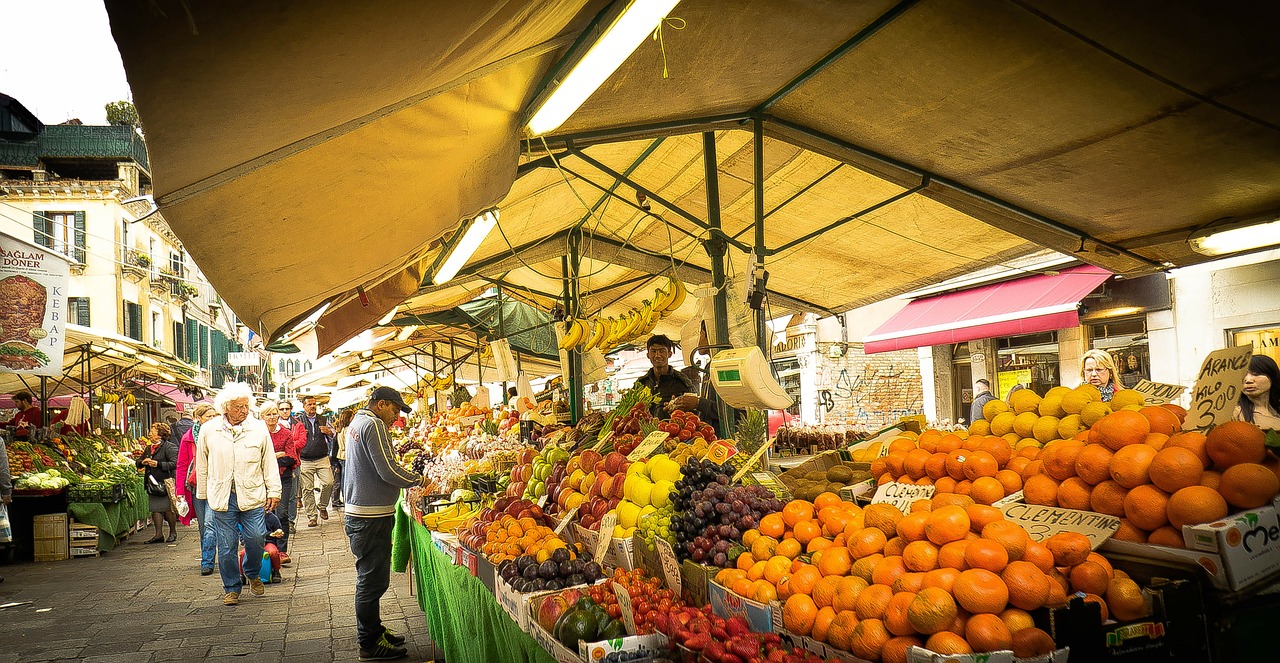
In the San Polo district of Venice you will find this bustling market for fish, fruit, vegetables flowers and much more.
The market offers a cheerful, colorful and spectacular show of real Venetian life and is a good place to do your shopping. The prices here are far below anywhere else in Venice and the range and quality of products on offer is incredible.
This is where the people of Venice Italy come to shop. The market starts from dawn and the best quality products go early. From around 8am you can often pick up good bargains from stallholders wanting to sell off what they have left.
Acqua Alta Bookstore
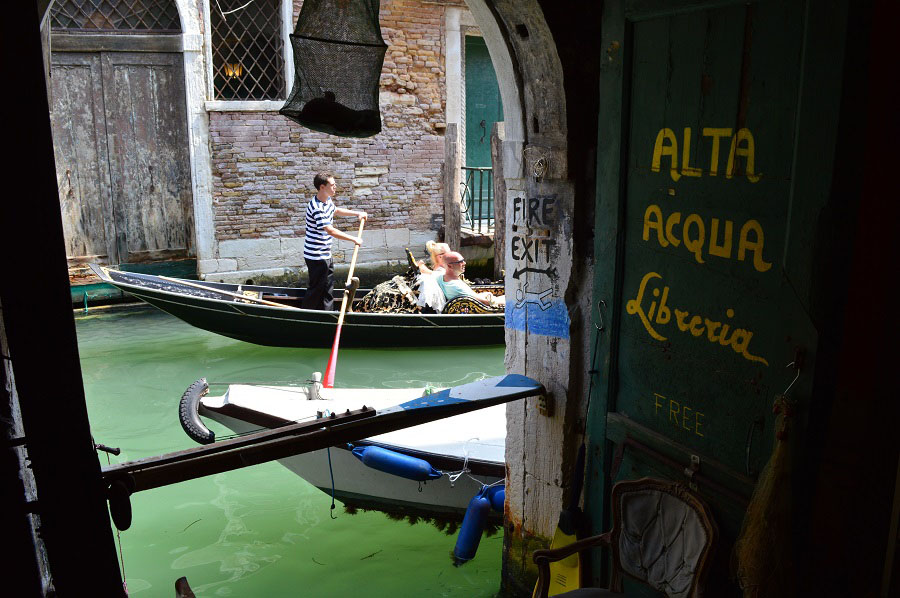
Not one of the "traditional" sights of Venice this is still a definite must-see. I can spend hours in here. Read more and see the photos of this incredible bookstore here.
Gobbo di Rialto
The hunchback of Rialto, opposite the Church of San Giacomo, has an intriguing history. Dating back to 1541 it was originally intended as a place of official proclamation. It was also the place the naked offenders, guilty of minor transgressions, had to kiss before being forgiven and pardoned.
San Giacomo da l'Orio
A rather dull looking church but artistically and architecturally this is one of the most significant of Venice's churches. More in my article.
Riva degli Schiavoni
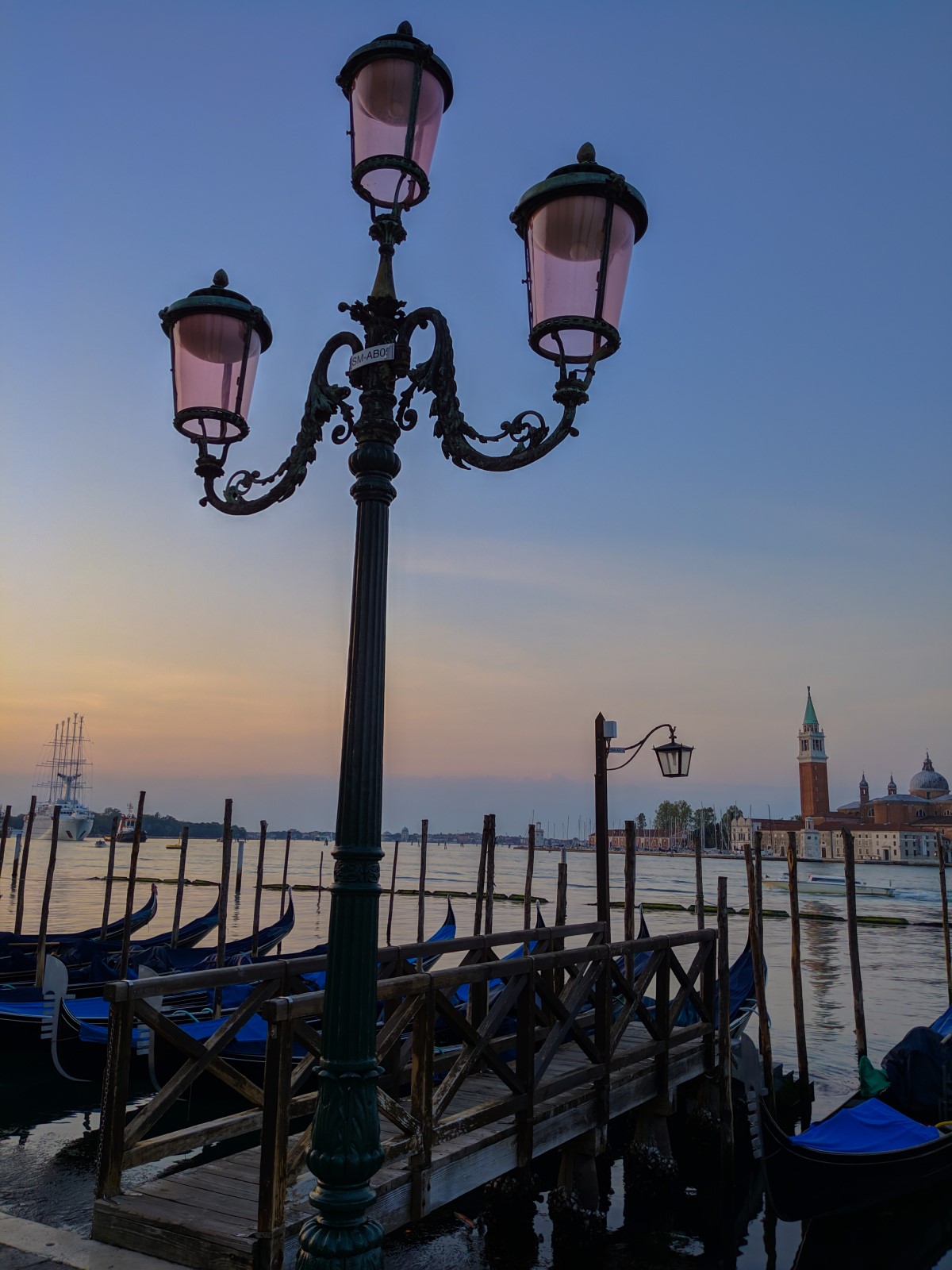
Venetians, like all Italians, love their after lunch and dinner strolls – passeggiata as they are known in Italian. Venice’s most famous promenade is the Riva degli Schiavoni, situated just off St Marks square.
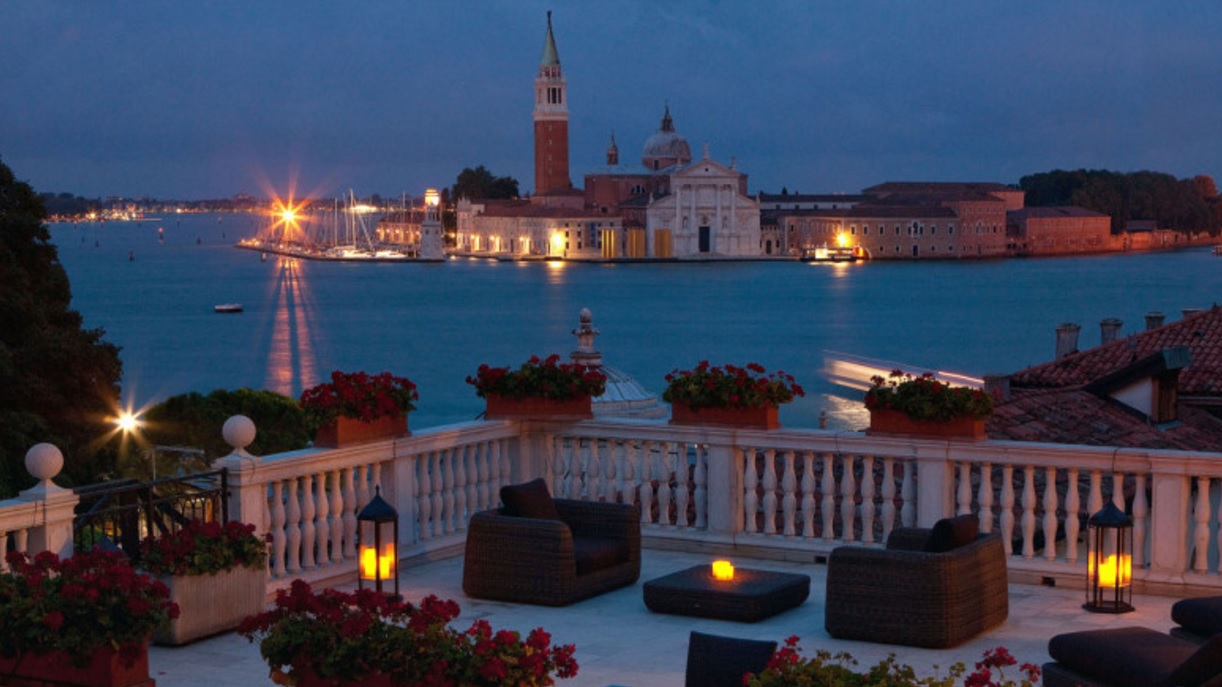
The walk along here is lovely, particularly on a fine summers day when the canal is abuzz with life, the view across to the island of San Giorgio Maggiore is magnificent, and the Riva is full of people enjoying the sunshine. This is pretty much a part of most Venice tourism itineraries but it is well worth doing.
The Metropole hotel in Venice's Castello district and right on the Riva degli Schiavone is a superb place to stay. For more on the Metropole Hotel click here.
San Giorgio Maggiore
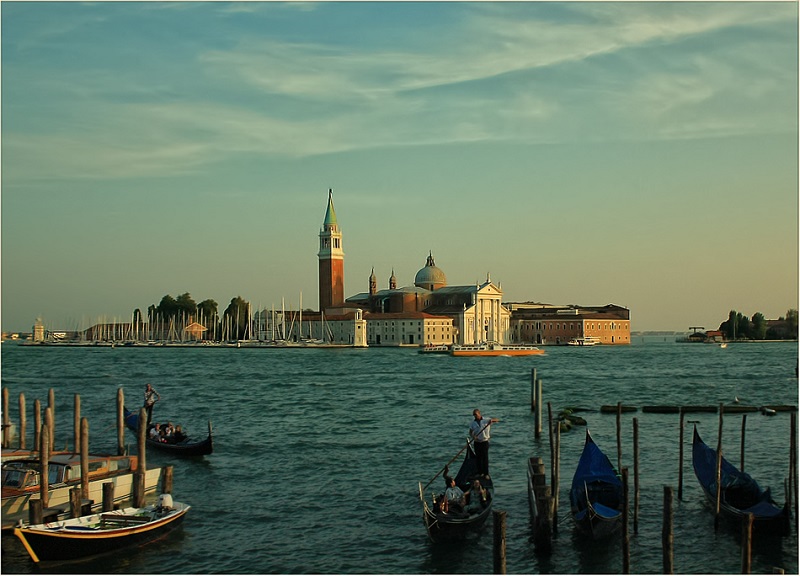
Looking across from St Marks square the island of San Giorgio is an
incredibly lovely sight and yet relatively few tourists make it over to
the island. Don't make the same mistake - the journey over on the water
bus is easy and well worth the effort and it certainly should be one of
the major Venice tourist attractions. For more on the island click here.
Need a place to stay near here? How about staying on a boat right near by? The famous Sarah Sun is the answer!
The Cemetery of Venice / San Michele Cemetery
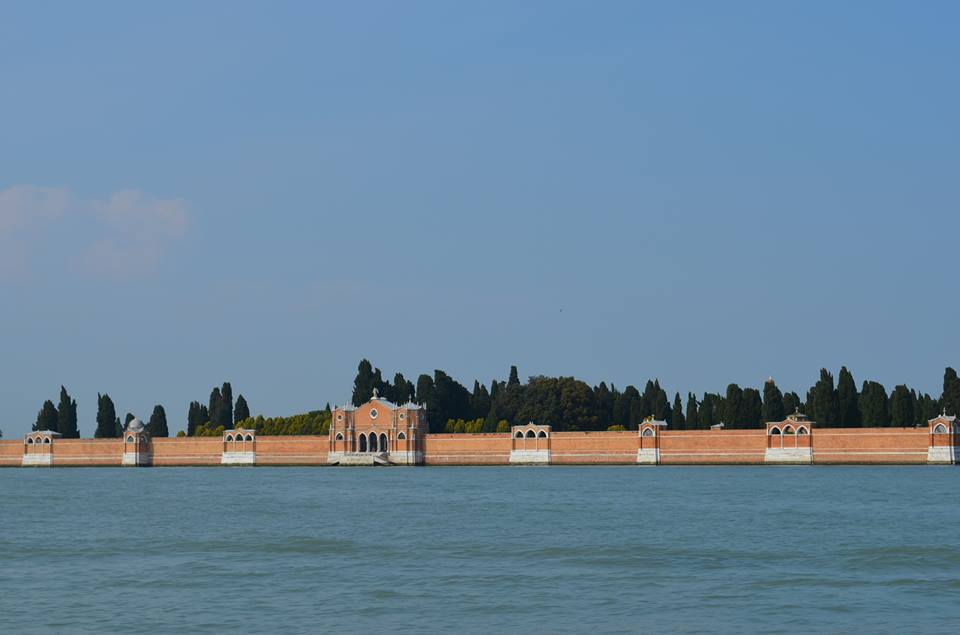
You can visit here with the number 42 water bus which makes a stop at Cimitero (cemetery). Why you should visit a cemetery while in Venice Italy – well firstly because it is a touching insight into the history of Venice through the ages and secondly it somehow seems especially sad being located on an island entirely dedicated to the dead.
Many a famous Venetian and a whole lot of foreigners are buried here and the names are indeed impressive, ranging from Ezra Pound through to Stravinsky. In Venice tourism has indeed been popular for centuries.
The cemetery is divided into Catholic, Protestant and Orthodox sections making it fairly easy to locate specific graves. Please remember to dress with decorum and show respect as this cemetery is still in use and many Venetians are there to visit the recently deceased.
If you would like to visit the Big Six sights of Venice tourism, then you can view our
Essential Venice Tourism Guide here.
Visiting Venice? Then don't miss these 6 bucket list destinations nearby.
Searching for something? Why not try our Venice Italy Search Engine.
Visited Venice?
I would love to hear about your visit to Venice, your experiences in the city, travel tips, favorite things about Venice. Anything you can share would be really appreciated by me and I am sure by other visitors to this site.
What Other Visitors Have Said
Click below to see contributions from other visitors to this page...
From Venice with Love Not rated yet
Italy is such a romantic place, a good destination for couples who are on a honeymoon. Too many to count are the lovely sights of Italy and right near …
What You Need to Know About Going to Venice Not rated yet
With its 116 islands, winding waterways, cobbled courtyards, beautiful architecture and tiny back streets, Venice is one of the most picturesque …
For tours of Venice Italy try these.
Please Book with Us... Maria here, if you enjoy my site I'd love your support.
Simply book your next trip anywhere (not only to Italy) via the link below or with any of the hotel links on the website.
You'll get the best deal available and the income I receive helps me to remain independent and to keep bringing you more of beautiful Italy.
You'll Enjoy These...
Winter in Venice - A Magical Time
They call it the secret season. A time when Venice returns to the mystical city it has been for centuries. Join us in discovering the magic of winter in Venice.
The Home of Things to Do in Venice
Looking for unusual things to do in Venice? Why not visit a few of the secret corners of Venice? The Dorsoduro is a good place to start...
The Canals of Venice - Exploring the Grand Canal
Of all the Venice canals, the Grand Canal is the greatest and perhaps the most beautiful avenue in the world. A beautiful avenue of water lined with palaces
THE Guide to Buying Murano Glass in Venice Italy or Online.
It is so easy to get ripped off in the shops around St Marks Square, that's why this Murano glass buying guide is essential reading...
Looking for a flight to Venice or Verona?
Looking for a flight to Venice or Verona? Our guide is essential reading. From anywhere in Europe or the USA we have your best options.
The Ultimate Veneto & Venice Itinerary
Visiting Venice? Want to explore a little of the wonderful Veneto region in which Venice is located? Then our Veneto and Venice itinerary is just what you need.
Map of Veneto, Venice and the Veneto Spas
On our site you will find a map of Veneto, plenty of maps of Venice, a map of the Veneto spas and many other maps and information on both Venice and the Veneto.
Really Good Photos of Venice
A collection of good photos of Venice and Verona. I hope you enjoy this album featuring the most beautiful city on earth.
The Italy! Mamma Mia! Blog
The ItalyMammaMia Blog shares news, beautiful Italian places, recipes and travel advice. We've videos and essential information for planning your next trip to Italy.
Haunted Buildings in Venice - Ca' Dario - 10 Dead
As haunted buildings in Venice go Ca Dario is hard to beat. The number of people who have died shortly after owning this building is shocking.
THE Guide to Car Hire in Venice Italy
Car rental in Venice can leave you with a sinking feeling. Read our guide to avoid that happening to you...
Photographs of Venice, the Veneto and Italy
These are some of the loveliest photographs of Venice and Italy that I have ever seen. Absolutely stunning is the only way to describe them...enjoy!
Maps of Venice Italy, Verona and the Veneto
A selection of very useful maps of Venice, Italy, Verona, and the Veneto Lots of secret places are marked, with insider info too. They await your discovery.
Shopping in Venice - The Guide
Shopping in Venice is often just an endless maze of tacky souvenir shops. Avoid them; join me as I show you where to shop. Discover authentic Venetian products
Flights to Venice Bargain Finder Guide
All you need to know about flights to Venice Italy and an insider guide to the beautiful cities of Venice and Verona. However you get here make sure you do. Everyone should see Venice and Verona.
Discover Venice in Summer
Venice in Summer is wonderful. Colorful flower boxes add a splash of red while the gondolas ply their way up canals, sparkling aquamarine in the summer sunshine
Cannaregio Venice - The Undiscovered City
Discover the enchantment of Cannaregio, Venice. Meander its historic alleys, savor local flavors, and uncover the soul of this authentic Venetian district.
Discovering the Best of Venice
The best of Venice - 6 experiences you simply must have if you are visiting Venice. Here is the list...
Summer in Italy... All Year Round
Give the gift of love straight from Italy - the land of amore. Have you experienced a summer in Italy? We've a way for you to bring that joy home with you...
Venice in July - Here's All You Need To Know
Great advice on how to avoid the crowds if you are visiting Venice in July and some wonderful ideas on things to do.
San Giacomo and the Most Beautiful Churches in Venice Italy
San Giacomo in Venice is a little known church—just the type of place I love and one of the most beautiful churches in Venice Italy.
The Colorful World of Burano
Discover a world of color. A place where every cottage is a different hue and where each and every color mixes and dances in the reflection off the canals. This is Burano!
A Good Value Hotel in Venice Italy
Looking for a good value hotel in Venice? We discovered a fantastic one this summer; great value and right by the Rialto Bridge
St Marks Square - The Number One Sight in Venice Italy
St Marks Square is the most beautiful piazza in the entire world - any Venetian will tell you so. Sparkling with light and color. Join me in discovering...
The Best Luxury Hotels in Venice Italy
Discover the epitome of luxury in Venice. Explore my insider's guide to the best luxury hotels in Venice, where opulence meets elegance.


More Travel Tips:
- Book your tickets to museums and other attractions in advance on Tiqets.com
- Book your accommodation. Booking.com and Agoda help you to book accommodation in advance
- Book your excursions. Wherever you go, make the most of your time! Excursions with professional guides will help you do this - choose a location and the best option for yourself on Viator or Getyourguide
- Book your car. At least a month before is best. Use Discover Car Hire.
- Cash Back on Flights: Great deals & money back with WayAway
- Get peace of mind when traveling. Get insured with VisitorsCoverage.com
- Home
- Secrets of Venice

Support Us Via our Sponsors
I earn a small % on purchases. it costs you no more.
For full sponsor list visit our privacy policy
As an Amazon Associate I earn from qualifying purchases.




New! Comments
Have your say about what you just read! Leave me a comment in the box below.